《10到25岁》第一章(6):维吉麦研究,指示青少年时,是否尊重导致后者的行为差异
说明:我正在连载《10到25岁》这本书的原文和翻译。本文是第一章的第6篇。到目前为止,原文的结构
- 介绍
- 第一部分:理解10到25岁的年轻人
- 第一章:我们为啥错了
Of all the chaos and devastation that World War I sowed around the globe, one of the least important consequences was an interruption in the Australian supply of Marmite.
在第一次世界大战给全球带来的混乱和破坏中,最不重要的后果之一是澳大利亚的玛麦酱供应中断。
Named for the French word marmite (“cooking pot”), Marmite is a sticky, dark- brown food paste made of concentrated, bottled brewer’s yeast. The salty, powerful flavor can only be described as distinctive. Though Marmite was developed in the early 1900s as a way of monetizing the yeast by-product of the Bass Brewery in Staffordshire, England, it was later discovered to be rich in the vitamin B complex, and so it became a standard part of British soldiers’rations.
玛麦酱(Marmite)得名于法语单词 marmite(“烹饪锅”),是一种粘稠的深棕色食品酱,由浓缩的瓶装啤酒酵母制成。其咸味和强烈的口感只能用独特来形容。尽管玛麦酱在20世纪初被开发出来,作为利用斯塔福德郡巴斯酿酒厂酵母副产品的手段,但后来发现它富含维生素B复合物,因此成为英国士兵口粮的标准部分。
As a part of the British Empire colonized by many British settlers and veterans, then, Australia had a demand for Marmite that the original manufacturer could no longer supply, both because of the war demand and because of long-term disruptions to international trade. So in 1922, Melbourne businessman Fred Walker hired food chemist Cyril P. Callister to develop a home-brewed replacement, Vegemite. Today it is still considered a taste of home by many Australians.
作为由许多英国定居者和退伍军人殖民的英帝国的一部分,澳大利亚对玛麦酱的需求,原制造商已无法满足,这既是因为战争需求,也是因为国际贸易的长期中断。因此,1922年,墨尔本商人弗雷德·沃克雇佣了食品化学家西里尔·卡利斯特开发了一种本土替代品——维吉麦。如今,它仍被许多澳大利亚人视为家乡的味道。
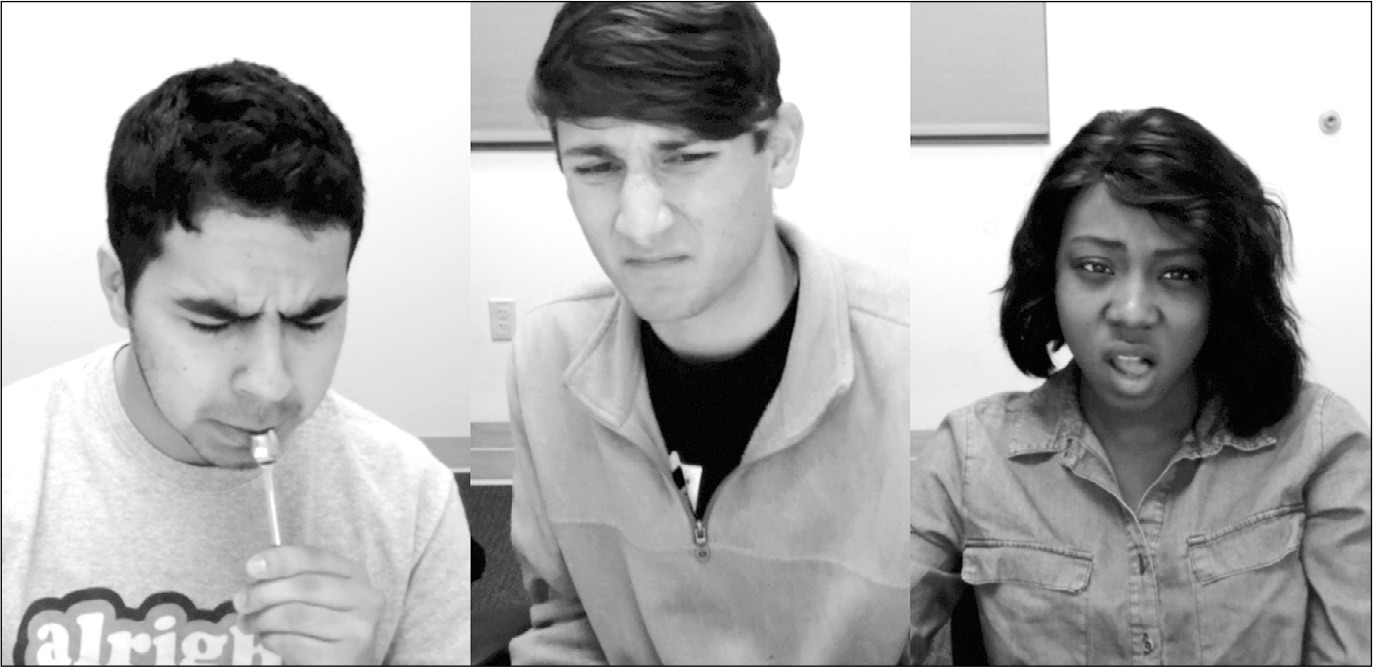
To most non-Australians, however, Vegemite is revolting. Just a taste prompts gagging, retching, keeling over, and exclamations of Oh no, what did I just eat? If someone took a picture of your facial expression at the exact moment when a spoonful of Vegemite touched your tongue and showed the photo to an expert psychologist who could spot any emotion, they could identify the telltale signs of disgust. Your cheek muscles would lift, your eyes would squint, your nose would scrunch, your lips would widen into a frown (see figure 1.2). The taste of Vegemite is so mind-bogglingly unpleasant to non-Australians that in 1988 the famous Stanford philosopher David Lewis coined what has been called the Vegemite Principle, which states that some things are so indescribably unpleasant that they must be experienced to be understood.
然而,对大多数非澳大利亚人来说,维吉麦是令人厌恶的。只需尝一口就会引发呕吐、干呕、晕倒,并惊呼 哦不,我刚刚吃了什么? 如果有人在维吉麦勺子触碰到你舌尖的那一刻拍下你的面部表情,并将照片展示给一位能识别任何情绪的心理学专家,他们就能识别出厌恶的明显迹象。你的脸颊肌肉会抬起,眼睛会眯起,鼻子会皱起,嘴唇会变宽成皱眉(见图1.2)。维吉麦的味道对非澳大利亚人来说,令人难以置信地不愉快,以至于1988年,著名斯坦福哲学家大卫·刘易斯提出了所谓的维吉麦原则,该原则指出,有些事物如此难以形容地令人不快,以至于必须亲身体验才能理解。
Vegemite has played many influential roles in the last century—as a nutritional supplement, as a dare for teenagers, and as an anchor for serious works of philosophy. For me personally, the most consequential was Vegemite’s starring role in a scientific test of how the feeling of respect can inspire young people to take their medication. Our experiment used Vegemite to directly test the link between the language adults use when instructing youth and their adherence with unpleasant medications.
维吉麦在上个世纪扮演了许多有影响力的角色——作为营养补充剂,作为青少年的挑战,以及作为严肃哲学作品的支柱。对我个人而言,最关键的是维吉麦在科学测试中的主演角色,该测试探讨了尊重感如何激励年轻人服药。我们的实验使用维吉麦直接测试了以下两者的相关性:成年人指导年轻人时所使用的语言,他们对不愉快药物的依从性。
Vegemite was an excellent candidate for our experiment on the causes of medication nonadherence because of its unpleasant taste and its high nutritional value, being chock-full of vitamins. If you put those two facts together—nobody wants to eat Vegemite, but eating it is possibly good for you in the future—then eating Vegemite sounds like just about everything adults ask young people to do for their well-being. Avoid junk food. Get enough sleep. Factor trinomials. Learn from critical feedback. And, most critically, take your immunosuppressants. That’s why Vegemite let us safely study problems like the kidney-transplant patients’ nonadherence. Failing to take Vegemite, unlike failing to take your actual anti- organ-rejection pills, doesn’t have real health consequences. But it’s a good stand-in for the adolescent predicament—where a young person is deciding how to behave based on how much the authority figure is showing them status and respect.
维吉麦是我们实验中研究药物不依从原因的理想候选者,因为它味道不佳且营养价值高,富含维生素。如果你将这两个事实结合起来——没有人想吃维吉麦,但吃它可能对你未来的健康有益——那么吃维吉麦听起来就像成年人要求年轻人做的所有事情:避免垃圾食品;保证充足睡眠;分解三项式;从批评性反馈中学习;最重要的是,服用你的免疫抑制剂。这就是为什么维吉麦让我们能够安全地研究诸如肾移植患者不依从的问题。不服用维吉麦,与不服用实际的抗器官排斥药物不同,不会产生真正的健康后果。但它很好地代表了青少年窘境——年轻人决定如何行为,是基于权威人物给予他们的地位和尊重的程度。
We brought 184 young people aged eighteen to twenty-five into the lab, and we asked them to sample a nutritional supplement (a small amount of Vegemite on a spoon). They tried it and learned that it was disgusting (see figure 1.2). Next, a medical professional instructed them to take a larger dose of the medicine—a heaping spoonful—in order to improve their own well-being and contribute to nutritional science.
我们邀请了184名18至25岁的年轻人进入实验室,并要求他们尝试一种营养补充剂(勺子上的一小撮维吉麦)。他们尝试后得知它很恶心(见图1.2)。接下来,一名医疗专业人员指示他们服用更大剂量的药物——一大勺——以改善自己的健康状况并为营养科学做出贡献。
We randomly divided the participants in half and gave them two different versions of the instructions. One group was asked to take the Vegemite respectfully by the medical professional (see the left side of figure 1.3). The other group was asked disrespectfully (see the right side of figure 1.3)
| 尊重指示组 | 非尊重指示组 | |
| 你好,我是医学院2年级的学生,我正完成一个系统医学课程的基本科学实验。我来到这里是为了... | ||
| 1. 提问,而非告知 | 问问你是否考虑吃这个药。 | 告诉你应该吃这个药。 |
| 2. 尊重对方的地位,不显示自己的 | 你已经是大学生了,所以我想我可以解释一下服下这个药物为什么能帮助你的科学理由。 | 根据我对医学和疾病的了解,你最好需要服下这个药物。 |
| 之前有人反馈说,服用的过程并不舒服,因为这药苦,... | ||
| 3. 肯定感受,解释,不忽视 | 想想自己服药时微妙的不舒服,也许能帮助到其他人。 | 不用管他们怎么说。 |
| 4. 假定自主性 | 谢谢你考虑这个建议。 | 提前谢谢你的合作。 |
我们随机将参与者分成两组,并给了他们两种不同版本的指示。其中一组,医疗专业人员尊重地要求服用维吉麦(见图1.3左侧)。另一组受到并不尊重的要求(见图1.3右侧)。
Medical professionals helped us write the disrespectful instructions on the right in figure 1.3 so they sounded like the normal way they talk to patients. The speaker positioned themselves as the authority (“based on what I know about medicine and disease”) who told the patient what to do (“you should take this medicine”). Should is a key word. It implies that I know what is best for you to do, despite what you personally may be experiencing. It presumes the young person lacks agency, like the “Think. Don’t smoke” campaign. Furthermore, the speaker diminished the importance of the patient’s feelings (“try to ignore” the disgusting taste of Vegemite).
医疗专业人员帮助我们撰写了图1.3右侧的不尊重指示,使其听起来像他们通常与患者交谈的方式。说话者将自己定位为权威(“基于我对医学和疾病的了解”)并告诉患者该做什么(“你应该服用这种药物”)。应该是一个关键词。它暗示了我知道对你来说做什么最好,尽管你可能个人有不同的体验。它假定年轻人缺乏自主性,就像“思考,不要吸烟”运动一样。此外,说话者贬低了患者感受的重要性(“尽量忽略”维吉麦的恶心味道)。
The instructions on the left in figure 1.3 are worded with more respect. Try reading them out loud. Hear the difference? We followed four principles when writing them. First: ask, don’t tell. This respects the young people by treating them as adultlike. Adults are asked; children are told. Second: find ways to honor the young person’s status—for example, point out their competence and expertise— rather than simply appealing to your own authority. Speaking respectfully means avoiding an I-know-better-than-you attitude. Although professionals might indeed know more about the medicine, they don’t know more about the young person’s own feelings or barriers to taking the medicine. Third: validate whatever negative experiences young people may have had. Treat their feelings as real and legitimate. Then look for a way forward. For instance, one can mention that negative feelings are a sign that they’re trying something worth doing. Fourth: presume agency. Acknowledge that the young person can make up their own mind, and then make it clear that you are rooting for them to make the healthy and positive choice. Another part of presuming agency is pointing out how their actions can have broader consequences (e.g., “doing your part” to help others).
图1.3左侧的指示用词更为尊重。试着大声读出来。听到区别了吗?我们在撰写时遵循了四个原则。第一,提问而非告知。这通过将年轻人视为成年人来尊重他们。(而通常情况是,成年人被提问;孩子被告知。)第二,找到尊重年轻人地位的方法——例如,指出他们的能力和专长——而不是仅仅诉诸于你自己的权威。尊重地说话意味着避免一种我比你更懂的态度。尽管专业人士可能确实对药物了解更多,但他们并不比年轻人更了解他们自己的感受或服药的障碍。第三,肯定年轻人可能有的任何负面体验。将他们的感受视为真实和合理的。然后寻找前进的方法。例如,可以提到负面感受是他们尝试值得做的事情的标志。第四,假定自主性。承认年轻人可以自己做出决定,然后明确表示你支持他们做出健康和积极的选择。假定的另一部分是指出他们的行为可能产生的更广泛后果(例如,“尽自己的一份力”帮助他人)。
After participants were instructed to take the Vegemite in one of these two ways, we left them alone to make their choices. What did we find? In the respectful-instructions group, 66 percent of young people picked up the spoon and ate the Vegemite, while only 47 percent of the group that heard the more disrespectful message did so. That’s a huge difference. Consider that nearly all our study’s participants found Vegemite disgusting and did not want to eat it. And yet nearly two-thirds did so when they were asked respectfully, even though there were no consequences for them if they refused.
在参与者被指示以这两种方式之一服用维吉麦后,我们让他们独自做出选择。我们发现了什么?在尊重指示组中,66%的年轻人拿起勺子吃了维吉麦,而只有47%听到不尊重信息的组这样做。这是一个巨大的差异,尤其是考虑到我们研究中几乎所有的参与者都觉得维吉麦恶心且不想吃。然而,当被尊重地要求时,近三分之二的人这样做了,即使拒绝对他们没有任何后果。
This is just one study, not the be-all and end-all. We haven’t yet proved that respectful language helps young people keep their kidneys. But the Vegemite study offers a critical takeaway: When we see data showing that too many young people take up smoking, don’t take their medication, or make some other unwise choice, we shouldn’t blame “kids these days” for acting irresponsibly. Instead, we should try to appreciate their adolescent predicament. They’re communicating to us that they want the same dignity and respect that we have as adults—and what’s irrational about that?
这只是一个研究,不是终极答案。我们尚未证明尊重的语言能帮助年轻人保住他们的肾脏。但维吉麦研究提供了一个关键的启示:当我们看到数据显示太多年轻人开始吸烟、不服用药物或做出其他不明智的选择时,我们不应责怪“现在的孩子”不负责任。相反,我们应尝试理解他们的青少年窘境。他们在向我们表达,希望得到与成年人同等的尊严和尊重——这有什么不合理的呢?